

3D

3D

3D

3D

3D

3D

3D

3D

3D

Robot Forearm Shell for FDM: Split Halves, Heat-Set Inserts, Service Hatch

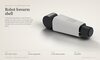
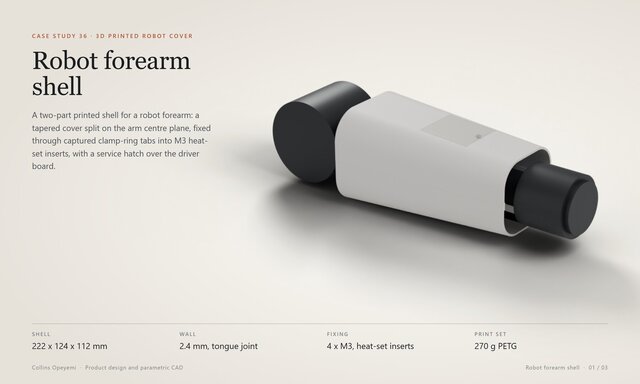
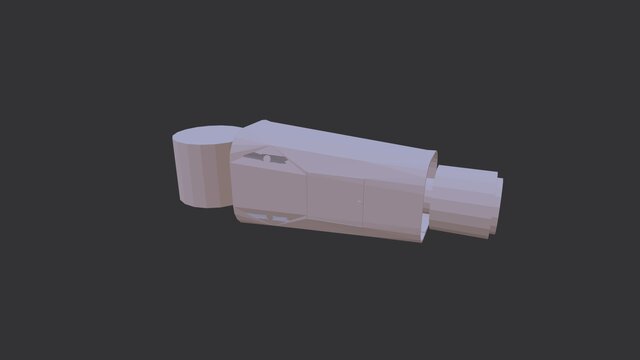
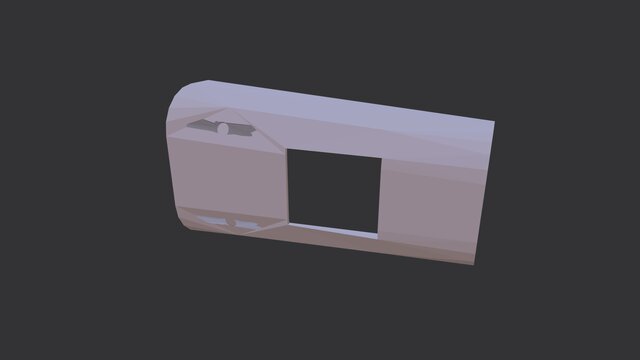
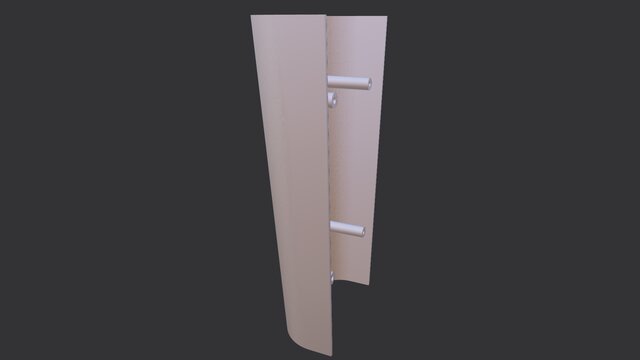
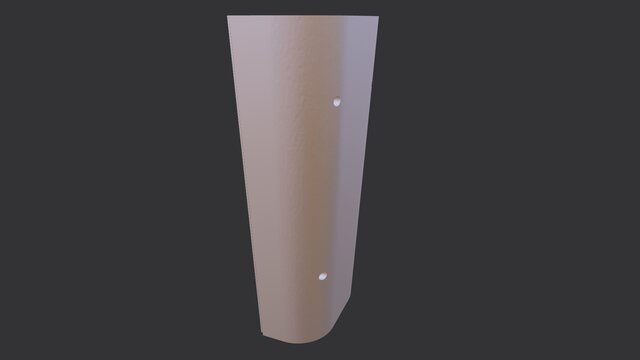
3D printed shell for a robot forearm, designed around the arm structure and split for FDM printing.
Tapered cover 222 mm long, 124 x 112 mm at the elbow and 94 x 90 mm at the wrist, with a 2.4 mm wall
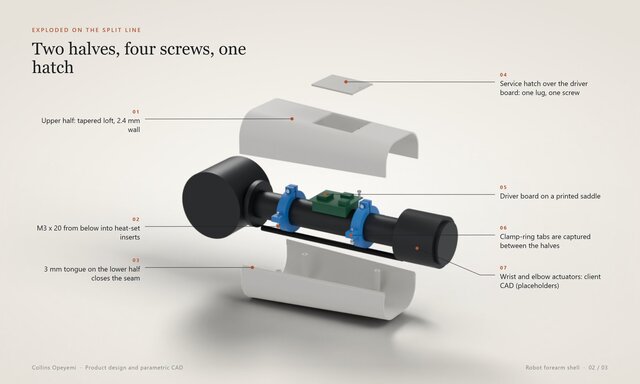
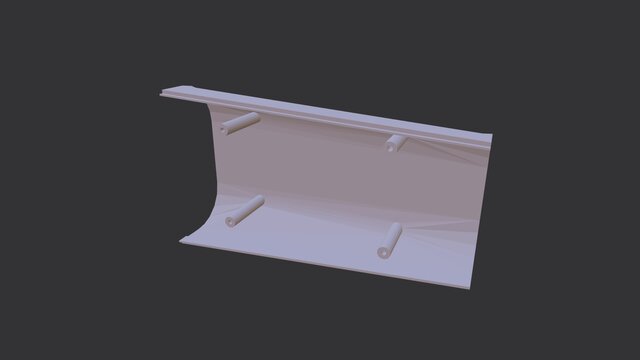
Split into top and bottom halves on the arm centre plane. Each half is 222 mm long, so it fits a 256 mm Bambu Lab bed with room to spare
A 3 mm tongue on the lower half closes the seam and locates the upper half, with 0.15 mm clearance
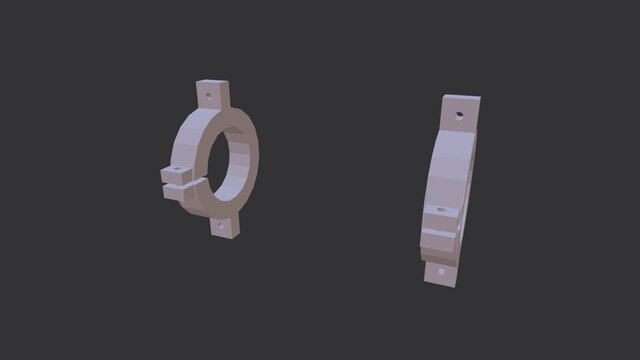
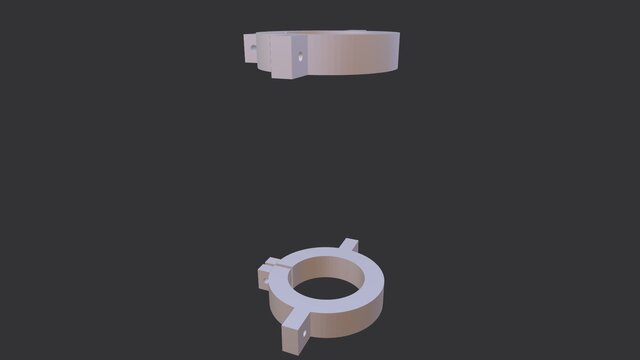
Two printed clamp rings grip the 40 mm arm tube with an M3 pinch screw each. Their side tabs are captured between the halves, so the shell is held by the tube and puts no load into the joints
Four M3 x 20 screws go in from below, through the tabs, into M3 heat-set inserts in bosses inside the upper half
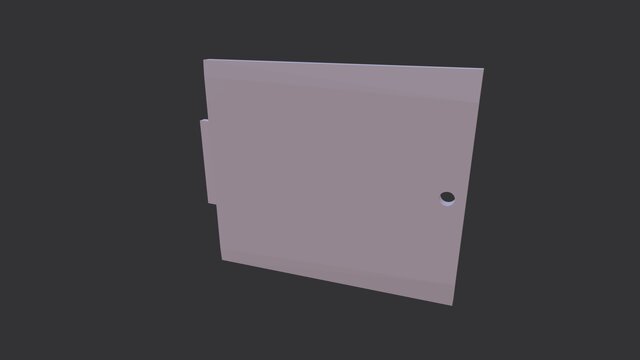
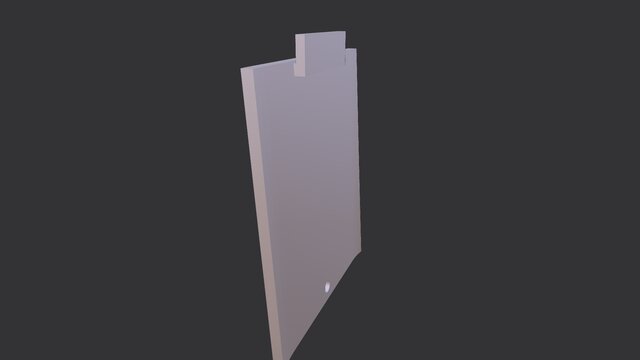
Service hatch 64 x 56 mm over the driver board, held by one lug at the front and one M3 screw into a heat-set insert at the rear
Cable run along the underside, clear of the clamp rings. Shell ends stop 6 mm short of the elbow flange and the wrist actuator
Print orientation: each half seam face down, with tree supports inside the roof only, so the outer surfaces need no supports
Every part checked against the arm structure, board, cable and fasteners in 3D for zero overlap. About 270 g for the set in PETG
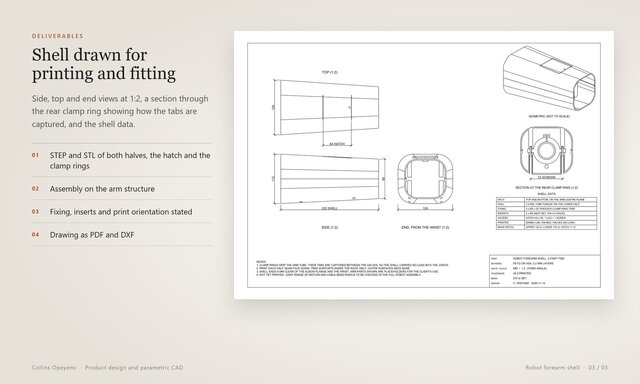
Files: STEP and STL of the upper half, lower half, hatch and clamp rings, STEP of the assembly on the arm (opens in SolidWorks, Fusion 360, Inventor, Creo and Onshape), a drawing with a section through the clamp ring and the shell data (PDF and DXF) and presentation renders.
The arm tube, actuators, board and cable are placeholders sized for this study. On a real project the shell is fitted to the client's own assembly, and the joint range of motion and cable bend radius are checked there. The shell has not been printed yet, so the first print is a fit check. The model is parametric, so the taper, wall, split line and fixing positions are quick to change. Message me if you need printed covers or housings designed around an existing mechanism.
Files (14)
License:
CC - Attribution - Non-Commercial
Learn more
Published