

ur10-robot-adapter-tools-

Project Overview: Robotic Singing Bowl System
The objective was to design a reliable, high-fidelity robotic system capable of striking and playing multiple singing bowls with consistent pressure, angle, and timing. The project involved custom mechanical design, architectural layout planning, and high-quality visualization for concept validation.
Core Components & Technical Specifications
1. Custom Robotic End-of-Arm Tooling (EOAT)
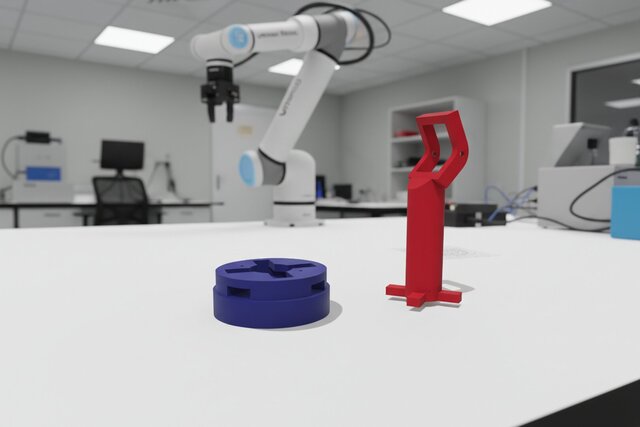
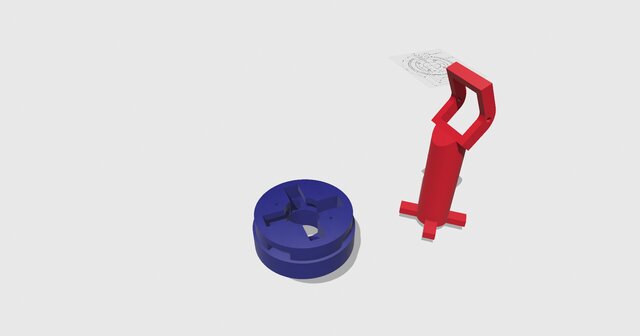
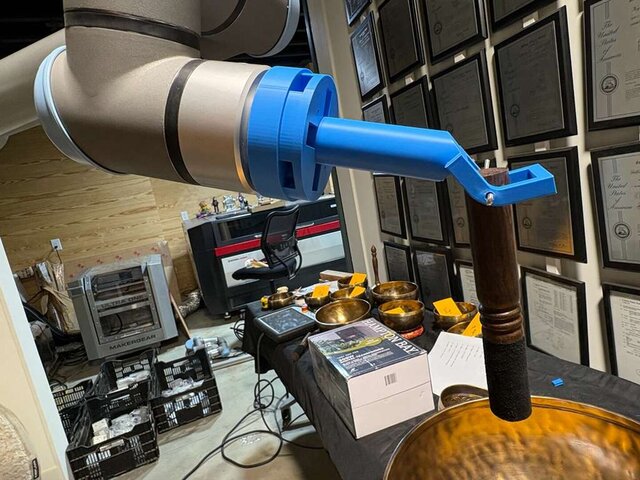
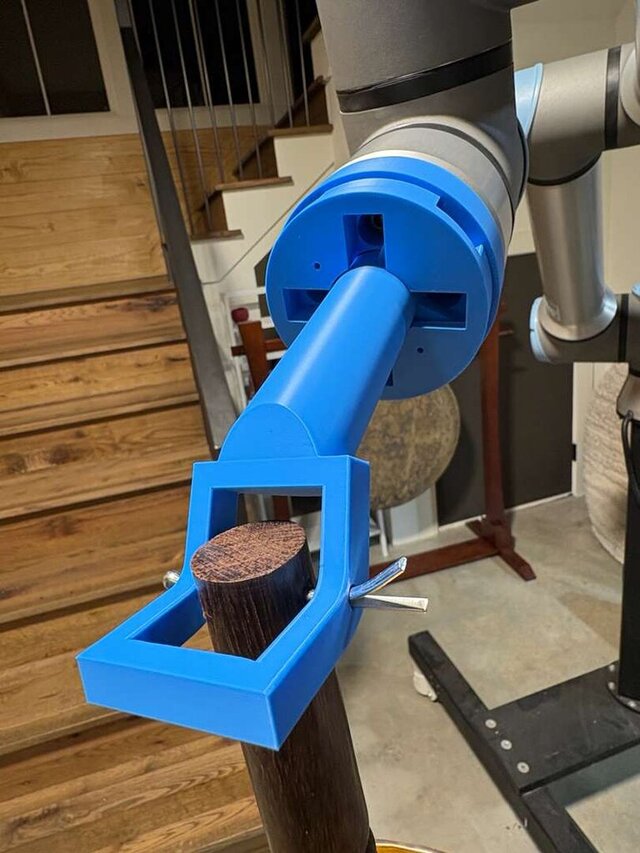
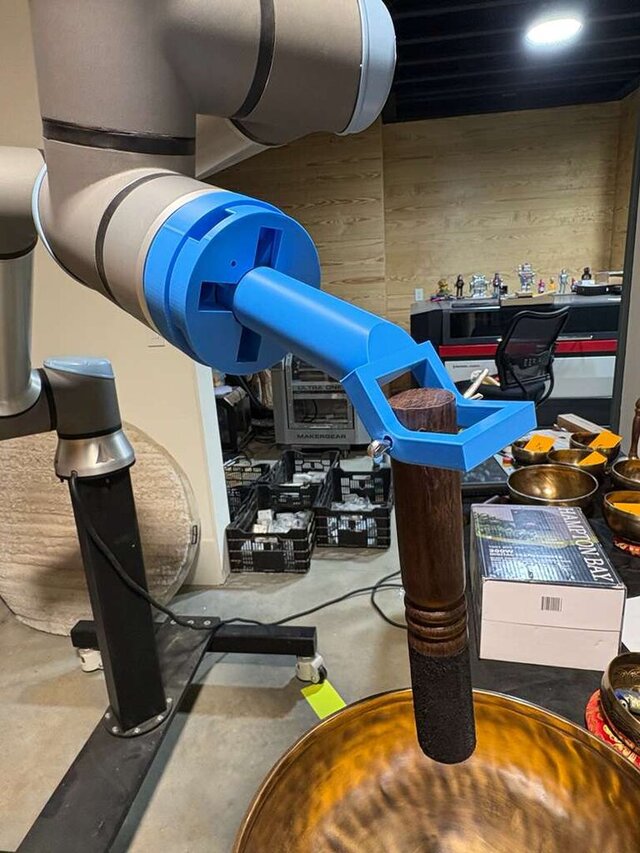
A specialized two-part adapter and striker system was designed to interface with the UR10e robot arm:
+1
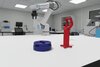
Blue Adapter Plate: A custom-machined base that mounts directly to the robot's tool flange, providing a secure, high-torque interface for the striking mechanism.
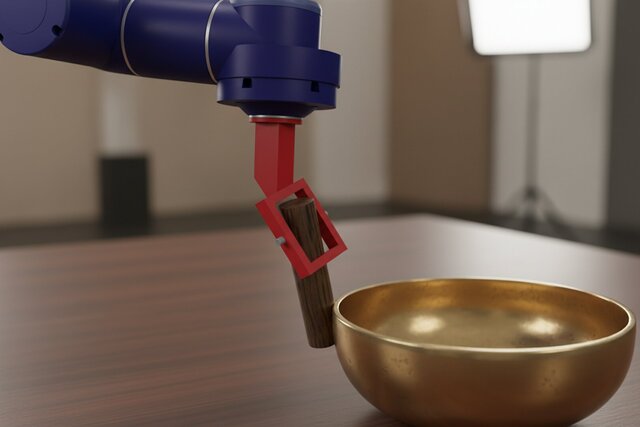
Red "Swinger" Striker: An innovative, gravity-assisted tool holder. It features a pivot-pin design that allows the mallet to swing freely, mimicking the natural "passive compliance" of a human wrist. This ensures a rich, resonant tone without the dampened sound often caused by rigid robotic strikes.
+1
2. Modular Architectural Layout (80/20 Framework)
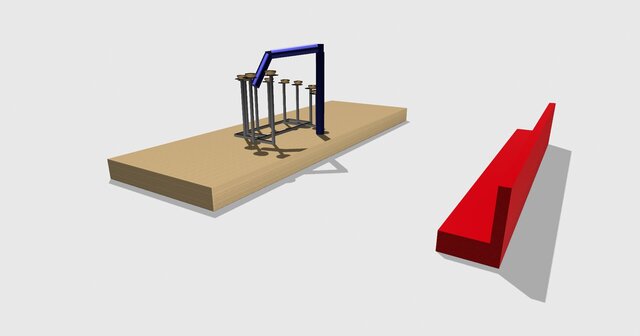
The singing bowls are arranged in a precise, tiered arc designed for both acoustic performance and spatial efficiency:
+1
Segmented Arc Design: The framework utilizes 15-series 80/20 aluminum extrusion, allowing for a modular and adjustable setup.
+1
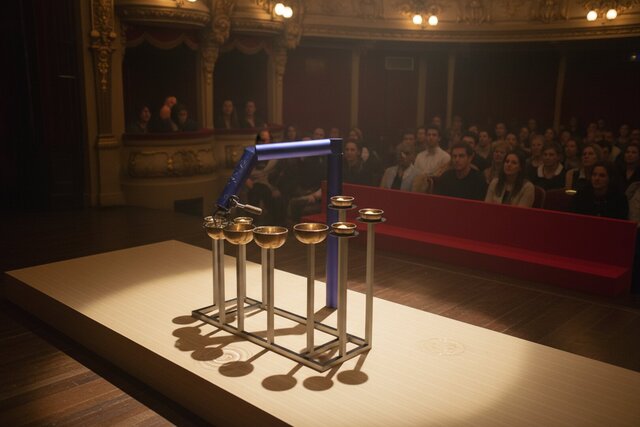
Tiered Height Progression: The layout features ten vertical stalks with heights incrementing from 24" to 42" in 2" steps. This staggered height ensures the UR10e can access every bowl within its reach envelope without collision.
Aesthetic Integration: The setup includes integrated atmospheric lighting (warm electric candles) behind each bowl to enhance the visual experience during performances.
3. Performance & Visualization
Acoustic Precision: By combining the free-swinging red striker with the UR10e’s sub-millimeter repeatability, the system achieves a level of tonal consistency impossible for manual play.
High-Fidelity Rendering: The project was developed through rigorous iterative design, using cinematic renders to validate the 80/20 structural layout and lighting before physical assembly.
Skills & Tools Demonstrated
Mechanical Design: Custom EOAT design, part tolerancing, and assembly.
Robotics: UR10e reach study, tool center point (TCP) optimization, and industrial automation.
Structural Engineering: Modular framing using 80/20 aluminum extrusion systems.
Visual Communication: Professional technical drawings (A3/A4 ISO standards), 3D modeling, and cinematic photorealistic rendering.
Published