

Thermal & CFD Simulation Analysis of an Oil-Jacketed Curing Reactor


Overview
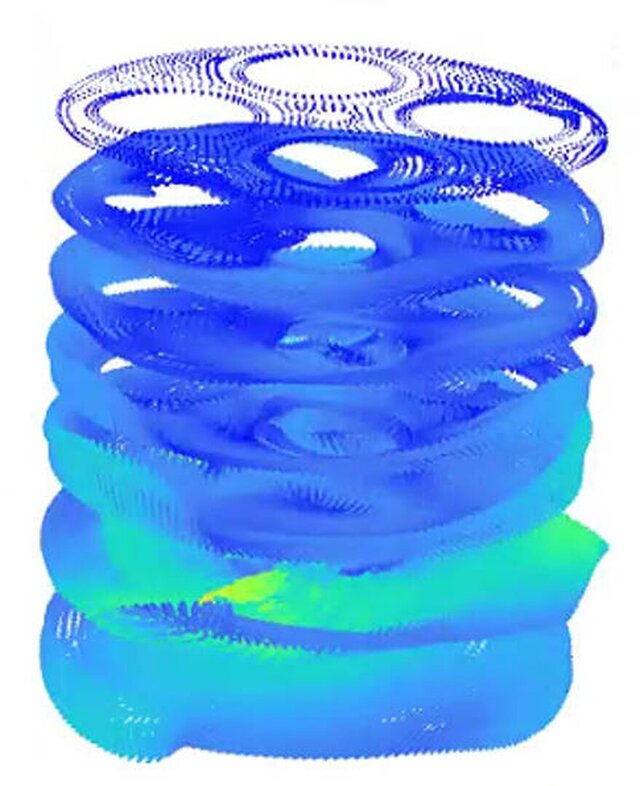
This project involved a comprehensive 3D CFD numerical simulation and conjugate heat transfer (CHT) analysis for an oil-jacketed curing reactor. The primary objective was to evaluate internal fluid dynamics, air flow patterns, and temperature uniformity across 4 tiers of specimen racks containing PVC film samples under various heat-oil operating temperatures (100°C, 200°C, 300°C, and 350°C). The simulation verified whether the maximum temperature gradient across the internal film samples met the design requirement of ≤ 5°C.
Key Work & Methodology
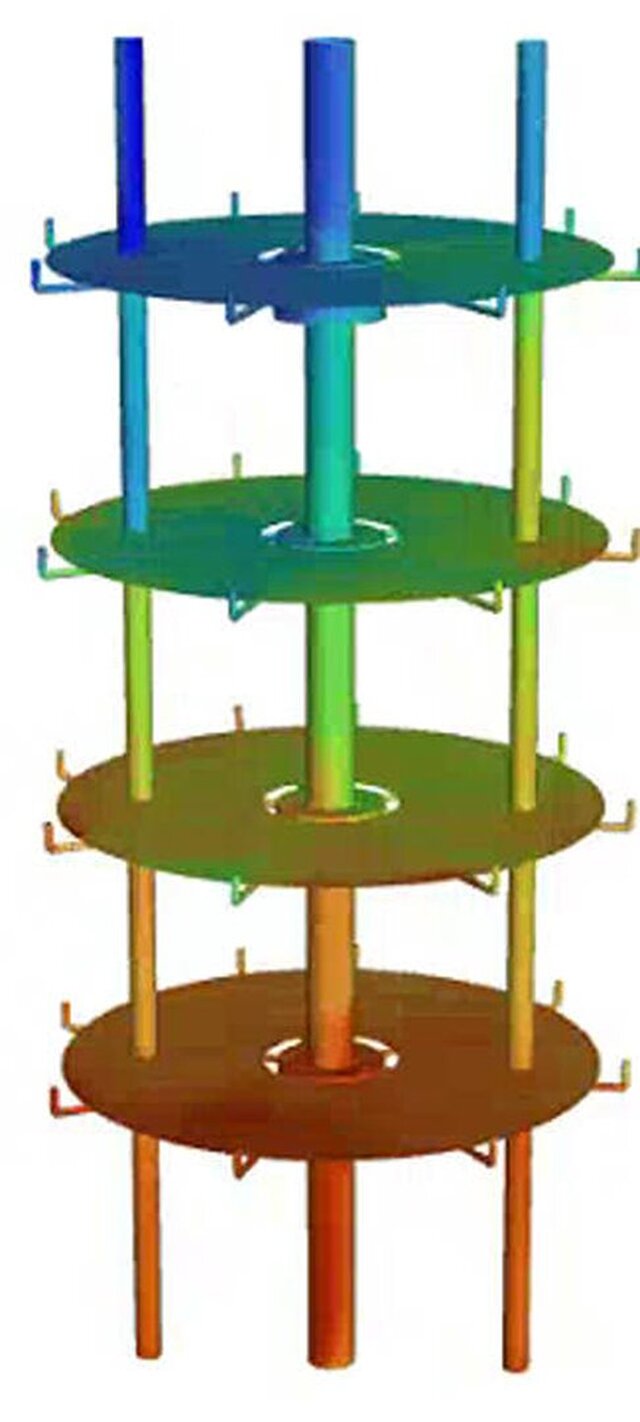
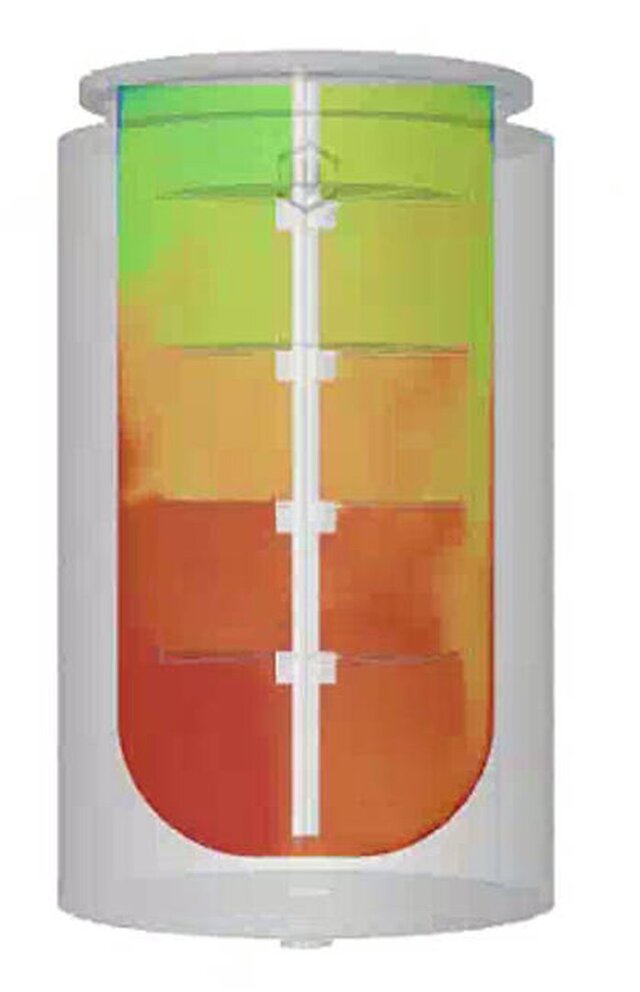
3D Conjugate Heat Transfer (CHT) Modeling: Developed a 3D thermal model based on mass, momentum, and energy conservation equations. The geometry includes the outer jacket (silicone oil), steel jacket walls, internal air domain, and simplified PVC film samples.
High-Quality Meshing: Polyhedral mesh technology was used to discretize the domain (~1.288 million polyhedral cells), ensuring computational accuracy and boundary layer resolution.
Boundary Conditions:
Thermal oil inlet/outlet configured in a bottom-inlet/top-outlet scheme at a flow rate of 5 L/min.
Natural convection heat transfer with ambient air (25°C) applied to external reactor walls.
Key Results & Findings
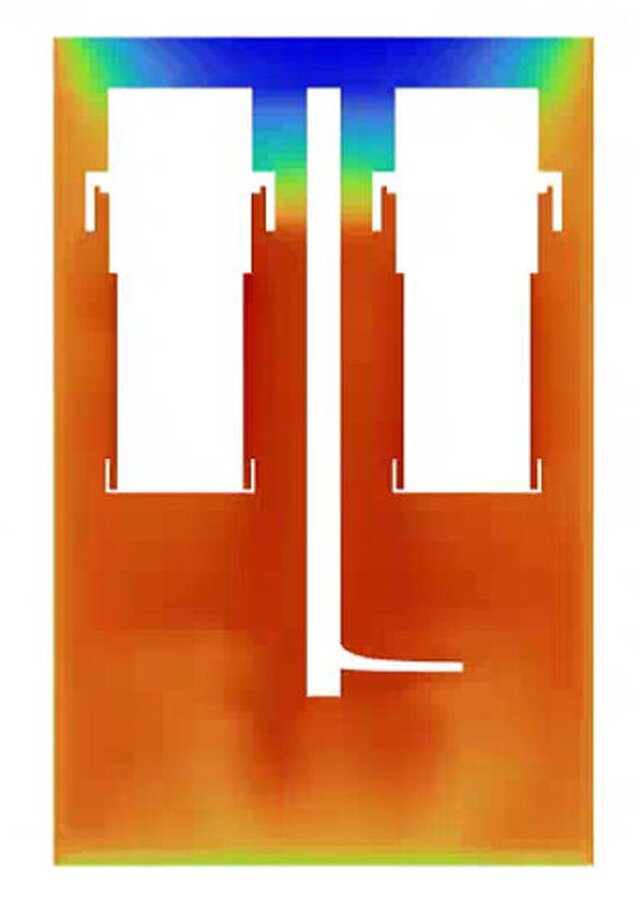
Thermal Distribution: Due to thermal oil heat loss along the flow path and internal air circulation, temperatures inside the reactor exhibit a top-to-bottom thermal gradient.
Temperature Difference Across Tiers: At operating temperatures of 100°C, 200°C, 300°C, and 350°C, the average temperature delta between Tier 1 (bottom) and Tier 4 (top) PVC films was measured at ~0.5°C, 1.4°C, 2.3°C, and 2.5°C, respectively.
Design Compliance: Across the entire operating range (up to 350°C), the maximum temperature difference on the PVC films remained below the 5°C limit, confirming that the reactor's thermal design meets performance specifications.
Optimization Recommendations
To further reduce heat loss and enhance temperature field uniformity, recommended design improvements include increasing the outer jacket wall thickness or adding external thermal insulation.
Published