
solar-structure

1. Rooftop Mounting Structures
These are installed on the roofs of buildings, commonly residential or commercial. They maximize the use of otherwise unused rooftop space and help reduce DC losses by keeping the solar panels close to the inverter. Rooftop mounts can be fixed or adjustable, but proper sealing is necessary to avoid roof leaks during installation.
Advantages: Lower installation costs, convenient maintenance, space utilization
Disadvantages: Roof structural considerations, shading concerns, limited panel orientation flexibility
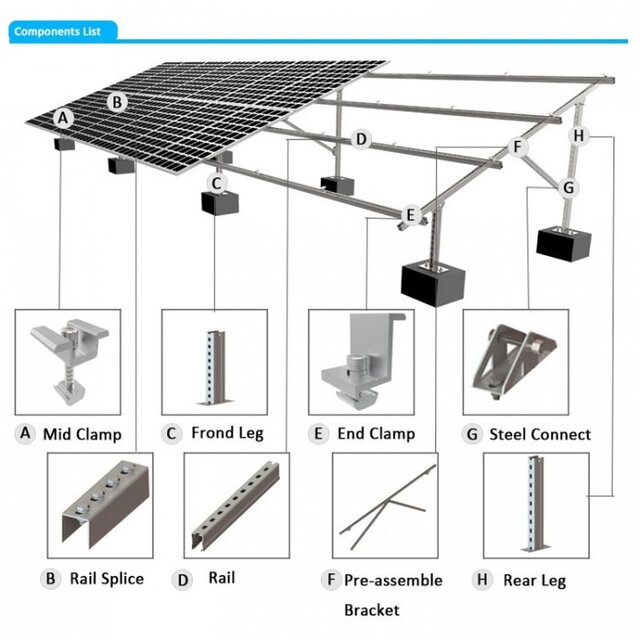
2. Ground-Mounted Structures
Installed directly on the ground using metal frames, ground mounts are ideal if rooftop space is unavailable or shaded. They can be fixed at a set tilt or equipped with adjustable brackets to optimize solar exposure seasonally.
Advantages: Easier maintenance and cleaning, flexibility to add more panels, better panel orientation
Disadvantages: Require sufficient shade-free land, potential aesthetic concerns, risk of soil dirt accumulation on panels
3. Pole-Mounted Structures
Panels are mounted on a single or multiple poles anchored to concrete slabs. This allows solar panels to be elevated above obstacles and avoid shading. Often used in agricultural or limited-space scenarios.
Advantages: Space-saving, reduced shading, lower vandalism risk
Disadvantages: Suitable typically for smaller systems, vulnerable to high winds/storms
4. Floating Mounting Structures
These solar panels are installed on floating platforms over water bodies like lakes, reservoirs, or ponds. The cooling effect of water can increase panel efficiency, and they utilize otherwise unused water surfaces, reducing land acquisition costs.
Advantages: Land-saving, increased efficiency, reduced water evaporation
Disadvantages: More complex installation and maintenance, applicable only in suitable water bodies
5. Carport Solar Structures
Solar panels are mounted above parking areas, providing shade for vehicles while generating electricity. These are common in commercial and institutional parking lots and can integrate EV charging.
Advantages: Dual use of space, vehicle protection, potential to reduce electricity bills
Disadvantages: Higher installation costs, space availability challenges
6. Smartflower Mounting Structures
A newer, aesthetically appealing design where solar panels fold and unfold like flower petals, equipped with dual-axis tracking that follows the sun for optimal efficiency.
Advantages: High efficiency due to tracking, easy maintenance, self-contained system
Disadvantages: Higher initial cost, requires expert installation
7. Tracking System Mounting Structures
These systems use motors and sensors to adjust solar panel angles throughout the day, either on a single axis (east to west) or dual axis (both vertical and horizontal), to maximize solar exposure and energy generation.
Advantages: Increased energy output, automatic orientation correction
Disadvantages: Higher cost and complexity, increased maintenance requirements
Materials and Design Considerations
Solar mounting structures are typically made from corrosion-resistant materials such as stainless steel, aluminum, or galvanized steel to withstand harsh environmental conditions including wind, rain, and heat. The choice depends on climate, durability, and cost.
Choosing the Right Solar Structure
Selecting the appropriate mounting structure depends on:
Available space (roof or ground)
Solar capacity needed
Budget constraints
Environmental factors (shadow, weather)
Installation and maintenance considerations
For locations like Karachi, where ample sun is available but space or rooftop conditions may vary, rooftop and ground-mounted structures tend to be popular, though floating or pole mounts could be suitable depending on site-specific factors.
In summary, solar structural types must be selected carefully to ensure maximum solar energy generation, system durability, ease of maintenance, and cost efficiency tailored to the installation environment and project goals.
Published