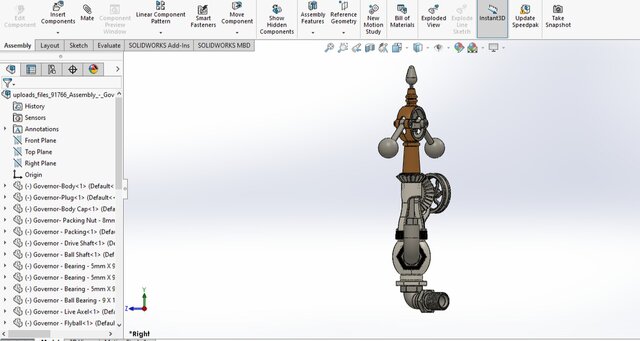
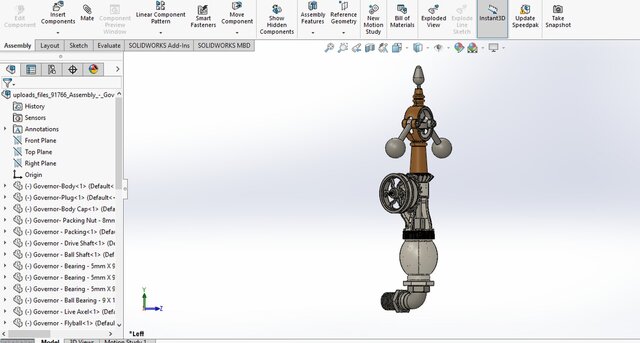
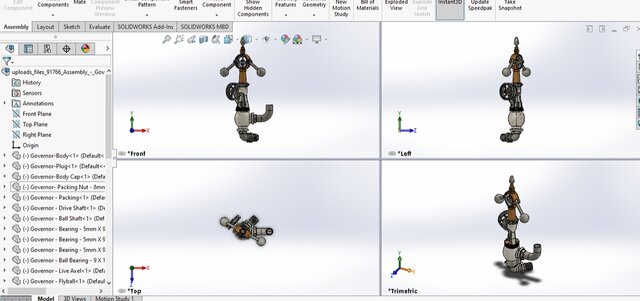
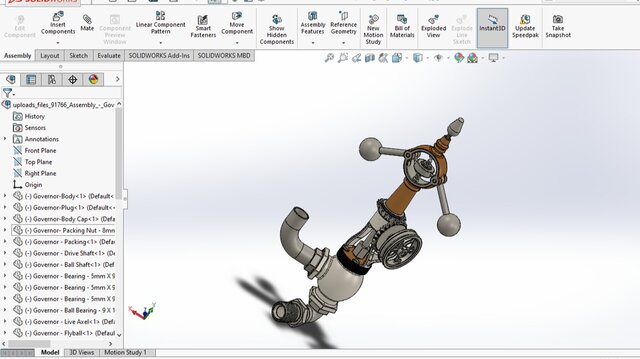


Mechanical Governor Valve Assembly | High-Precision 3D CAD Modeling, Mechanical Design & Engineering Assembly

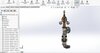
This project showcases the complete design and development of a highly detailed Mechanical Governor Valve Assembly created with a strong focus on engineering accuracy, functional design, manufacturing feasibility, and professional CAD modeling standards. The objective of this project was to develop a realistic mechanical assembly by designing every individual component from scratch and integrating them into a complete engineering model that accurately represents the construction and working arrangement of an industrial governor valve system.
The project demonstrates the complete workflow involved in mechanical product development, beginning with conceptual understanding, individual component modeling, precision assembly creation, and final engineering presentation. Every part within the assembly was modeled independently while maintaining dimensional consistency, clean geometry, and accurate relationships with surrounding components. The final assembly reflects a professional engineering approach that emphasizes accuracy, organization, and practical manufacturability.
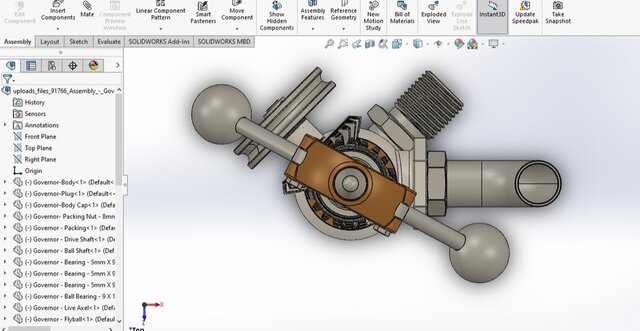
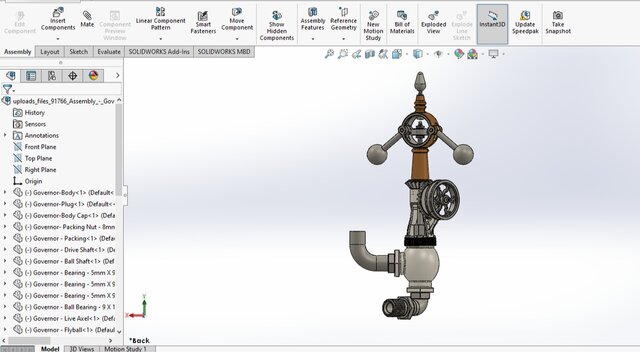
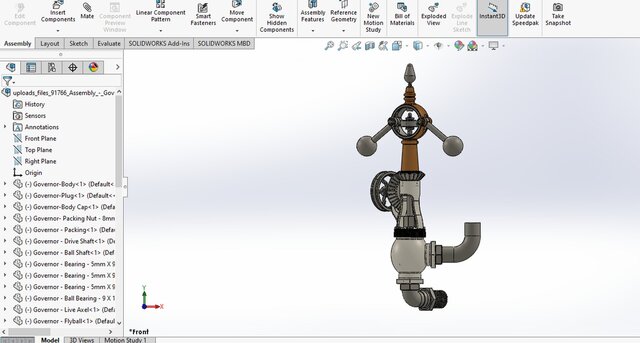
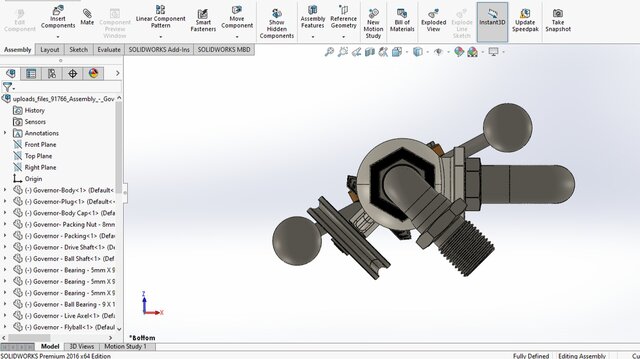
The assembly consists of numerous precision-engineered components including the governor housing, valve body, rotating flyball mechanism, balancing arms, central drive shaft, bevel gear system, bearings, shafts, threaded pipe connections, mounting hardware, retaining components, support structures, fastening elements, and additional mechanical interfaces required to complete the governor mechanism. Every feature was developed with attention to engineering details to ensure that the complete assembly maintains realistic proportions and mechanical integrity.
During the modeling process, significant attention was given to maintaining a structured workflow that allows future modifications without compromising assembly quality. Each component was created using parametric design techniques, making it easier to update dimensions, replace parts, or introduce design improvements during future development stages. This design methodology supports efficient product development while maintaining consistency throughout the entire assembly.
A key aspect of this project was achieving a balance between engineering realism and clean CAD practices. Every component was positioned using proper assembly constraints to create a fully constrained mechanical assembly. Mating relationships were carefully defined to maintain accurate alignment between shafts, bearings, gears, rotating members, and structural supports. The final assembly demonstrates smooth integration between all mechanical elements while preserving realistic assembly behavior.
Particular emphasis was placed on mechanical accuracy throughout the entire design process. Rotating components were positioned carefully to maintain correct centerlines, bearings were integrated to provide realistic shaft support, threaded interfaces were developed with manufacturing considerations in mind, and structural components were designed to provide logical support for moving assemblies. Every design decision was made with the objective of creating a model that closely represents a practical engineering solution rather than simply producing a visual representation.
The governor mechanism demonstrates several important principles of mechanical engineering including rotational motion, centrifugal force, shaft transmission, gear engagement, bearing support, mechanical balancing, and controlled movement between interconnected components. By integrating these mechanisms into a complete assembly, the project highlights the interaction between multiple engineering systems while maintaining realistic mechanical functionality.
Special care was taken to create smooth transitions between components, maintain consistent wall thickness where appropriate, preserve symmetrical geometry, and eliminate unnecessary modeling complexity. This approach improves the overall quality of the assembly while making future editing and maintenance significantly easier. The organized feature structure also enhances productivity during engineering revisions and reduces development time for future product modifications.
This project also demonstrates practical experience in assembly planning and component integration. Instead of treating every component as an isolated model, each part was developed with consideration for its interaction with neighboring components. Shaft locations, bearing seats, gear positions, threaded joints, mounting interfaces, and structural supports were designed together to ensure complete assembly compatibility.
Beyond visual accuracy, the project reflects a strong understanding of engineering documentation requirements. The completed assembly can be used as the foundation for manufacturing drawings, exploded assembly views, technical illustrations, product animations, engineering presentations, maintenance manuals, prototype development, and manufacturing documentation. The organized structure also supports bill of materials generation, component identification, assembly sequencing, and future engineering improvements.
The model has been prepared with flexibility in mind, allowing design modifications, dimensional updates, and engineering improvements without requiring the complete assembly to be rebuilt. This reflects real-world engineering workflows where product revisions are common throughout the product development cycle. Maintaining clean feature organization and logical assembly hierarchy improves collaboration between designers, engineers, manufacturers, and clients.
From a mechanical engineering perspective, this project demonstrates experience in creating complex assemblies containing rotating shafts, precision bearings, bevel gear systems, threaded mechanical interfaces, structural housings, mounting components, and interconnected moving mechanisms. These skills are directly applicable to industrial machinery, manufacturing equipment, fluid control systems, automation equipment, mechanical power transmission systems, and custom machine design.
The governor valve assembly also highlights the importance of engineering visualization. A well-developed CAD assembly not only communicates design intent but also assists in manufacturing planning, quality inspection, assembly training, maintenance procedures, technical documentation, and customer presentations. High-quality CAD models significantly reduce engineering errors and improve communication between different departments during product development.
Every component within the assembly was modeled with attention to detail to create a professional engineering result. Circular features, shaft interfaces, bearing locations, mounting holes, mechanical transitions, threaded regions, and support geometry were designed carefully to produce a clean and visually balanced assembly. The final model demonstrates both technical knowledge and attention to engineering aesthetics.
This project represents a complete mechanical design solution rather than simply a collection of CAD models. From individual component creation through final assembly integration, every stage of development reflects professional engineering practices commonly used in industrial product development. The completed assembly can support concept validation, design reviews, manufacturing preparation, product visualization, technical documentation, and future product enhancements.
The project demonstrates proficiency in transforming engineering concepts into practical digital products using structured CAD methodologies. Strong emphasis was placed on model quality, engineering consistency, manufacturability, assembly planning, and long-term usability. The resulting assembly is suitable for industrial presentations, engineering portfolios, prototype development, client demonstrations, manufacturing references, educational applications, and product development projects.
As a CAD designer, I focus on delivering clean, accurate, and production-ready models that help clients move efficiently from concept to manufacturing. My workflow emphasizes organized feature trees, precise assemblies, design flexibility, and engineering best practices to ensure every project is easy to review, modify, and manufacture.
Whether the requirement is developing a new product from an idea, creating a complex mechanical assembly, redesigning existing equipment, preparing manufacturing drawings, or supporting reverse engineering projects, I strive to provide reliable, high-quality CAD solutions that meet professional engineering standards. This Mechanical Governor Valve Assembly reflects that commitment to quality, precision, and practical engineering design.