

Lubrication system

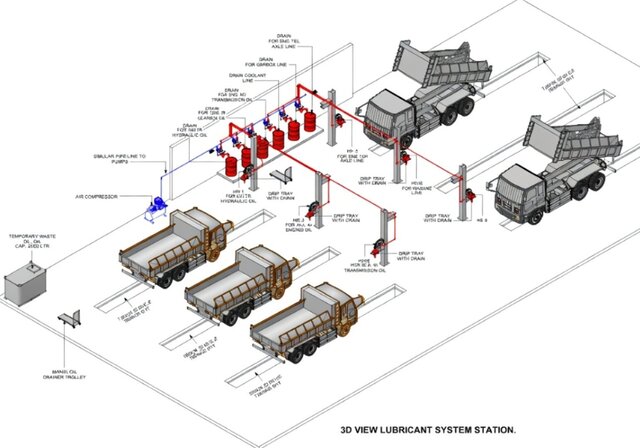
This is a centralized lubricant dispensing and waste oil collection system designed for a heavy truck service workshop (truck service trench bay). It allows mechanics to quickly and cleanly fill various oils, grease, and coolant into trucks while simultaneously collecting the drained (waste) oils from the vehicles.The system is typical for large fleet maintenance facilities (mining trucks, dump trucks, heavy commercial vehicles, etc.).Main Components & How It Works1. Storage and Dispensing Side (Clean Oils)Several large barrels/drums are stored on the right side of the workshop.
Each drum contains a specific lubricant:Hydraulic Oil (H-PSS)
Engine Oil (15W-40)
Transmission Oil (80W-90 or 85W-140)
Axle Oil (85W-140)
Coolant
Grease
Each drum has its own dedicated pump (electric or pneumatic) mounted on top.
From the pumps, dedicated color-coded pipes run overhead or along the walls to the service bays.
The pipes end with hose reels (HR-1 to HR-6) mounted near the service trench bays. Mechanics pull the hose from the reel and dispense the exact fluid needed directly into the truck.
2. Service Bays (Truck Service Trench Bay)There are multiple service positions where trucks are parked over trenches.
At each position you see:Hose reels (HR-1, HR-2, HR-3, etc.) for filling fresh oil.
Drip trays with drains underneath the truck to catch any spills during filling.
3. Waste Oil / Drain SideWhen mechanics drain oil from the truck (engine, transmission, axle, hydraulic, etc.), the old oil flows into drip trays with drains placed under the vehicle.
These drains are connected via red pipes to a waste oil collection system.
The waste oil is collected in a central temporary waste oil tank (shown in the 3D view as “Temporary Waste Oil, Cap. 2500 Ltr”).
There is also a manual oil drainer trolley for smaller or additional collection.
4. Supporting EquipmentAir Compressor: Supplies compressed air to operate pneumatic pumps.
Piping network: Clearly labeled with sizes (3/4", 1", etc.) and fluid types.
White oil/grease trolley: A mobile cart for smaller topping-up jobs.
Hose reels with support structures: Mounted on posts or walls for easy access.
Fluid Flow SummaryFresh Lubricants:
Barrel → Pump → Main piping line → Hose reel (HR) → Nozzle → Into the truckWaste/Drained Oils:
Truck drain point → Drip tray with drain → Collection piping → Temporary Waste Oil Tank (2500 Ltr) or Drainer TrolleyBenefits of This SystemClean and organized workshop (no messy floor spills)
Fast servicing – one mechanic can fill multiple fluids quickly
Reduced contamination risk (dedicated lines for each fluid)
Proper waste oil management (environmental compliance)
Easy inventory control of lubricants
Typical Use CaseA large mining or construction fleet workshop where many heavy dump trucks or haulers come in daily for oil changes. Instead of rolling barrels around or using manual funnels, everything is piped and ready at the service bay.Would you like me to explain any specific part in more detail? For example:The piping routes
Which hose reel is for which fluid
How the waste oil is handled
Or differences between the two diagrams
Published