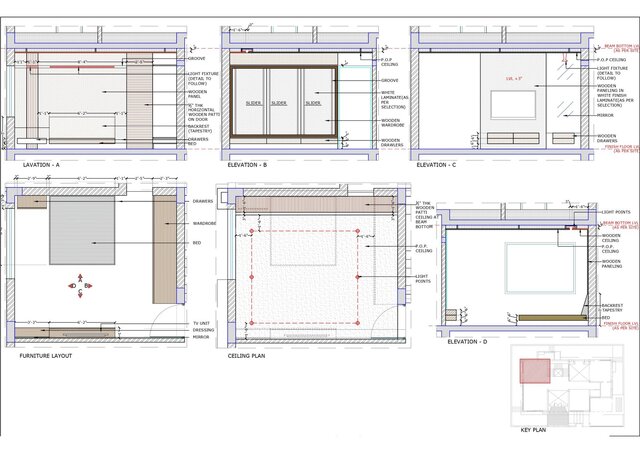

ground floor bedroom interior details

1.Layout & Space Planning
Bed placement (usually centered on a main wall)
Pathways around furniture (at least 2-3 feet for ease of movement)
Functional zones (sleeping, dressing, working, relaxing)
2.Bed & Bedding
Bed type: platform, canopy, storage, sleigh, upholstered, etc.
Size: twin, full, queen, king, California king
Headboard: padded, wooden, tufted, metal frame
Bedding: sheets, duvet, comforter, pillows, throws, bed skirt
3.Furniture
Nightstands/bedside tables (with lamps, books, clocks)
Dressers or chests of drawers
Wardrobes or built-in closets
Seating (armchairs, benches, ottomans)
Desks or vanity tables (if space allows)
4.Lighting
Ambient lighting (ceiling fixtures, chandeliers, recessed lights)
Task lighting (bedside lamps, reading lights)
Accent lighting (LED strips, wall sconces, spotlights)
Natural light sources (windows, skylights, curtains/blinds)
5.Flooring
Hardwood, laminate, carpet, tiles, or rugs
Area rugs under the bed or seating areas for warmth and texture
6.Walls & Colors
Paint colors or wallpaper (neutral tones, pastels, bold colors)
Wall decor (artwork, mirrors, photos, shelves)
Accent walls (textured wallpaper, wood panels, paint)
7.Decor & Accessories
Throw pillows and blankets
Plants and greenery
Decorative trays, vases, candles
Clocks, books, and personal items
8.Technology & Extras
TV or sound system (mounted or on a stand)
Charging stations for devices
Smart lighting or climate control
Published