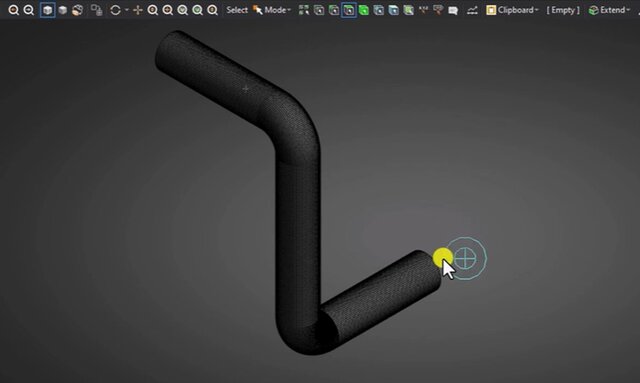
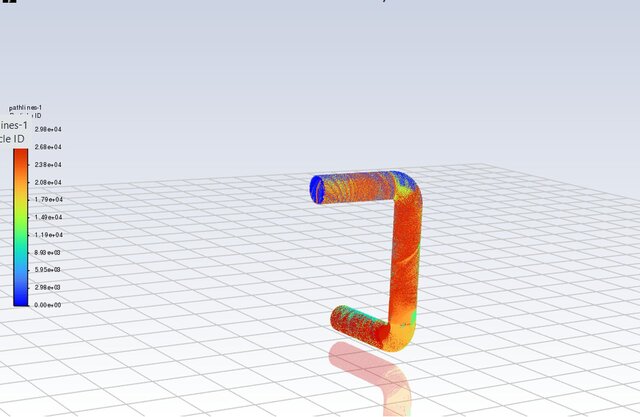


CFD erosion Analysis of pipe Elbow

CFD Erosion Analysis of Pipe Elbows Under Particle-Laden Flow
A computational fluid dynamics study analyzing erosive wear in pipe elbow geometries subjected to multiphase, particle-laden flow — a critical failure mode in oil and gas, slurry transport, and process piping systems where elbows experience concentrated wear due to flow redirection and particle impact.
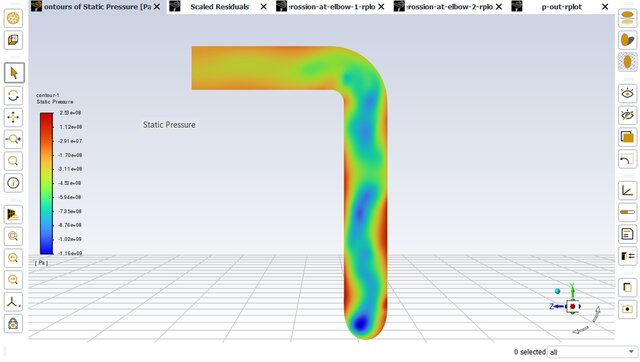
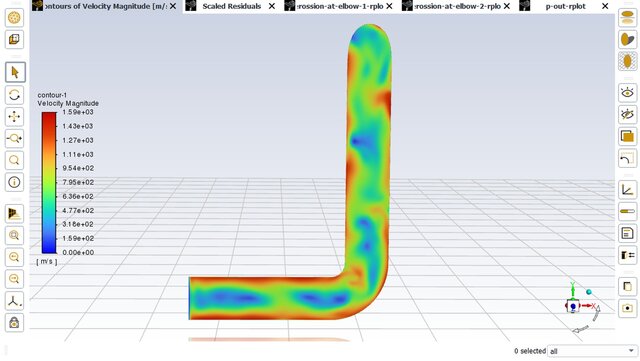
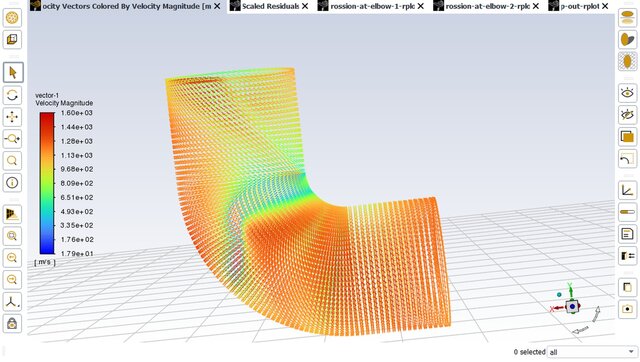
Using ANSYS Fluent, I modeled the internal flow field through the elbow geometry and applied the Discrete Phase Model (DPM) to track solid particle trajectories entrained in the carrier fluid. The Oka erosion model was used to predict erosion rate and identify high-wear zones on the elbow's internal surface, particularly at the outer bend radius where particle impingement is typically most severe due to flow separation and secondary vortex formation.
The analysis captured how flow velocity, particle size and concentration, and elbow bend geometry (radius-to-diameter ratio) influence erosion severity and location insights directly applicable to piping design decisions such as material selection, wall thickness allowances, and elbow geometry optimization to extend service life in erosive service conditions.
Post-processing included erosion rate contour mapping across the internal pipe surface, identification of maximum erosion zones, and comparison of erosion severity across the flow regime evaluated, providing actionable data for predictive maintenance and design improvement.
This project reflects the same core methodology I apply across erosion and multiphase flow studies CFD/DPM setup, erosion modeling, and results interpretation for real-world wear-critical components in piping, filtration, and fluid handling systems.
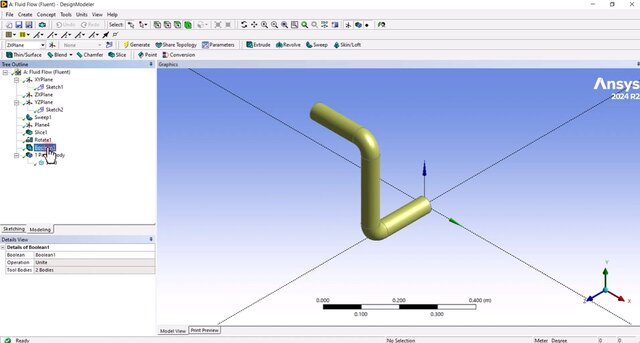
Tools used: ANSYS Fluent (DPM, Oka Erosion Model), CAD geometry preparation, multiphase/particle-laden flow modeling
Published