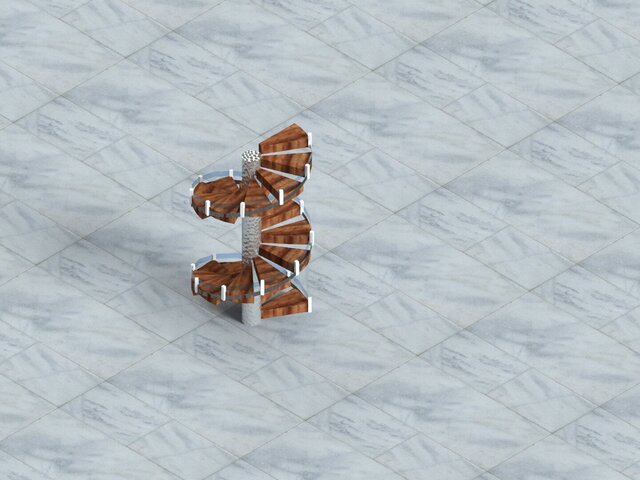

3D Floor Stairs


Overview:
A 3D mechanical drawing of floor stairs helps visualize staircases in three dimensions, showing all details for construction or architectural design.
Essential for accurate planning in residential and commercial buildings.
Key Features:
Treads: Horizontal steps for walking
Risers: Vertical portion between treads
Landing: Intermediate platform (if multi-flight)
Handrails/Guardrails: Safety feature along stairs
Stringers: Support structure for the steps
Steps to Draw:
Draw the base/floor plan showing stair footprint
Add tread and riser dimensions accurately
Sketch the 3D view in isometric or perspective
Include handrails and supports
Annotate dimensions, materials, and angles
Design Considerations:
Rise and run: Maintain comfortable step height and depth
Slope: Standard staircase slope is 30–35°
Safety: Include handrails and slip-resistant treads
Aesthetics: Open or closed risers depending on style
Tips:
Use isometric projection to show all steps clearly
Highlight structural supports for clarity
Ensure consistent dimensions for safe construction
Published